
One face. One expression. Three different shots placed beside it. Audiences swore they saw hunger, then grief, then desire. The actor never changed. The cut did.
An experiment with a single close-up
In early Soviet Moscow, a young filmmaker named Lev Kuleshov ran an experiment that would change how filmmakers think about editing. He took an existing close-up of the popular actor Ivan Mozzhukhin, a face showing no particular emotion, and cut it against three different images:
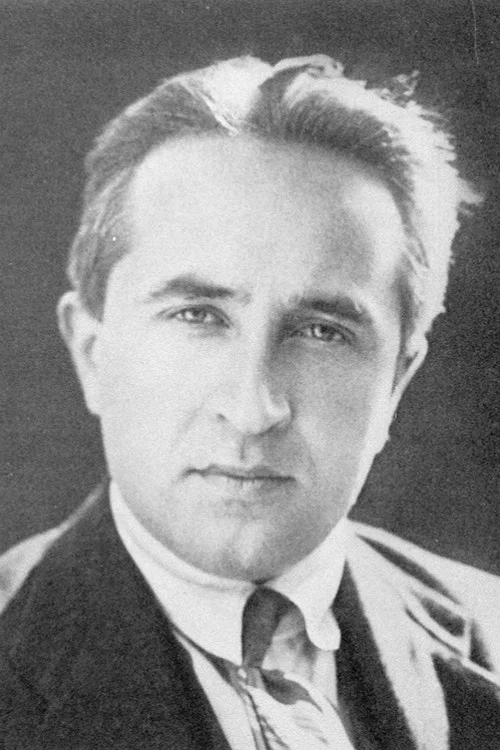
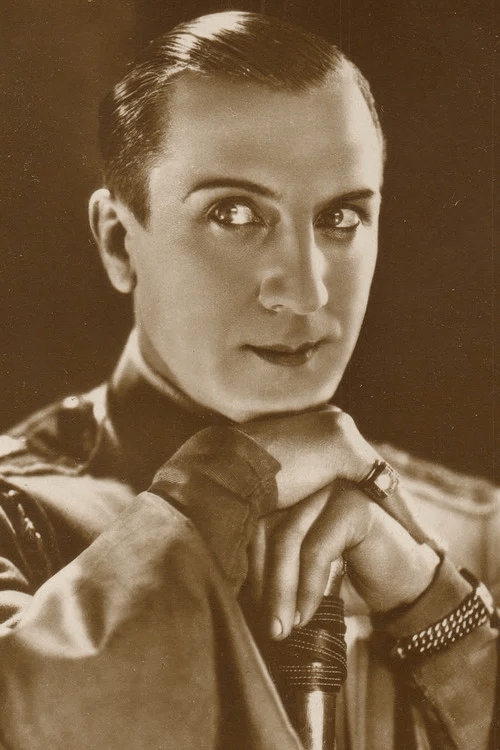
- List
- a bowl of soup on a table
- a girl lying in a coffin
- a woman reclining on a divan
Audiences praised the acting. They saw a man pensive and hungry over the soup, grieving over the dead child, and full of longing for the woman. Kuleshov’s student Vsevolod Pudovkin, who described the experiment in 1929, pointed out the catch: in all three versions, the face was exactly the same shot.
What the effect actually says
A shot takes its meaning from the shots around it. When two images follow each other, viewers do not read them separately. They assume a connection and supply the missing emotion, thought or motive themselves.
That is why Kuleshov’s experiment is often called the moment editing became an art of its own. A film is not only recorded; it is assembled. The feeling lives in the join between two pieces.
Hitchcock’s version
The most famous explanation came from Alfred Hitchcock, in a 1964 television interview with Fletcher Markle. Using his own face, he showed how a squint followed by a mother playing with her baby, then a smile, makes him look like a kindly old man. Swap the middle shot for a woman in a bikini, and the very same smile turns into a leer.
He built an entire film on the idea. In Rear Window (1954), James Stewart sits at his window, and almost everything we read on his face comes from what the film cuts to next. It is a close cousin of the dolly zoom, another Hitchcock tool for putting a character’s inner state on screen.
Does it really work?
The original footage is lost, so researchers have tried to recreate the experiment:
- 1992. Stephen Prince and Wayne Hensley rebuilt it with 137 viewers and did not find the effect.
- 2006. An fMRI study led by Dean Mobbs found that emotional context did shift how people rated neutral faces, and how their brains responded.
- 2016. Daniel Barratt and colleagues tested 36 viewers and found neutral faces were rated in line with the context shot.
- 2024. A study in PLOS One using clips from real films found evidence for the effect again.
The verdict: the effect is real, but subtler than the legend. It works best when the face is truly neutral and the context shot is clear.
How filmmakers use it today
- Reaction shots. Editors often borrow a take the actor never meant for that moment. A pause between lines can become shock, doubt or love, depending on what comes before it.
- Point-of-view sequences. Character looks, we see what they see, back to the character. This three-shot pattern is Kuleshov at work, and it is how horror builds dread.
- Performance in the edit. Many actors say underplaying gives the editor more options. A neutral face can be shaped in the cut; an overdone one cannot.
- Trailers and advertising. Put a face or a product next to a feeling, and viewers carry the feeling across.
Try it yourself
- Record five seconds of a friend looking just off camera with a blank expression.
- Shoot three context shots: a plate of food, an empty hospital bed, a sunset.
- Make three edits, each pairing the same face with a different context shot.
- Show each version to a different person and ask what your friend is feeling.
Then you will understand why Kuleshov believed the real work of cinema happens in the cut. The camera records a face; the edit decides what it means.
Sources
- Kuleshov effect, Wikipedia
- Does the Kuleshov Effect Really Exist?, Barratt et al., i-Perception (2016)
- Reexamining the Kuleshov effect, PLOS One (2024)
- How Context Influences Our Perception of Emotional Faces, Frontiers in Psychology (2017)
- Directors
- Alfred Hitchcock, Lev Kuleshov